
What should homeowners check on a roof in fall?
Fall is a useful time to inspect the roof, gutters, attic, and areas around chimneys or vents before colder weather arrives. In Wayland, NY, roofs may face falling leaves, heavy rain, strong winds, freezing temperatures, snow, and repeated freeze-thaw cycles during the colder months.
A fall inspection does not require climbing onto the roof. Many problems can be identified safely from the ground, attic, or upper-floor windows. Look for:
- Missing, cracked, curled, or lifted shingles
- Dark areas or exposed fasteners around roof penetrations
- Sagging roof lines
- Loose or damaged flashing near chimneys, vents, skylights, and wall intersections
- Granules collecting in gutters or at downspout outlets
- Moss or heavy organic debris in shaded areas
- Water stains or damp insulation in the attic
Small defects can become more serious after rain, ice, and snow. A damaged shingle may allow moisture beneath the roofing system, while loose flashing can direct water into walls or ceilings.
Should leaves be removed from the roof?
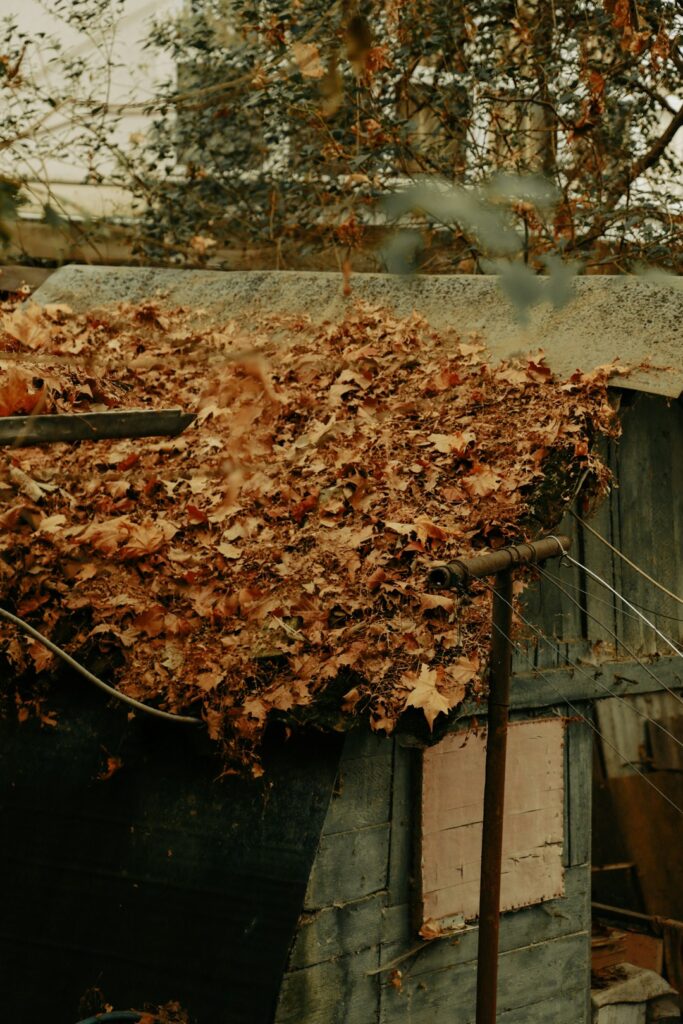
Leaves should be removed when they collect in thick layers, especially in valleys, behind chimneys, around roof vents, and along areas with limited drainage. A thin scattering of leaves usually is not an emergency, but compacted organic debris can hold moisture against the roofing material.
Wet leaves also add weight and may block water from flowing toward gutters. As they decay, they can create conditions that encourage moss and algae growth. On low-slope roof sections, debris is more likely to remain in place and deserves closer attention.
Do not rake a roof with a standard garden rake. The tool can scrape off protective granules, tear shingles, or damage flashing. Walking on a sloped roof is also hazardous when surfaces are damp, frosty, or covered with debris. Ground-based removal using an extension tool is safer when it can be done without stretching or working near overhead wires.
How should gutters and downspouts be prepared for winter?
Gutters should be cleared of leaves, shingle granules, nests, and other debris before persistent freezing weather. Water must be able to move freely away from the roof and foundation.
After cleaning, check whether:
- Gutters are securely attached and do not pull away from the fascia
- Downspouts are connected at every joint
- Water is directed away from the foundation
- Elbows and outlets are not blocked
- Gutters slope gently toward downspouts
- Sections are not cracked or separated
A clogged gutter can cause water to back up beneath the roof edge. In winter, trapped water may freeze and expand, increasing stress on gutter joints, fascia boards, and roof edges.
Downspout extensions should discharge far enough away from the foundation to prevent pooling. The correct distance depends on the property’s grading and drainage, but water should not collect beside basement walls or flow toward a walkway where it can freeze.
Why do roof valleys need extra attention?
Roof valleys carry water from two sloping sections into a concentrated drainage path. Because leaves and small branches often settle there, valleys are common locations for blocked water flow and hidden moisture problems.
Inspect valleys from the ground or a safe viewing point. Look for piles of debris, exposed underlayment, bent metal, damaged shingles, or areas that remain wet long after rainfall. Do not pry debris out with sharp tools, since the material beneath it may be easier to damage than it appears.
Valleys near mature trees may need to be checked more than once during autumn. A roof that is clear in early fall can become covered again after several windy days.
What should homeowners inspect around chimneys, vents, and skylights?
Roof penetrations deserve close attention because they interrupt the continuous roofing surface. Flashing around these areas should lie flat and appear securely attached, without open seams, rust-through, separated sealant, or missing pieces.
Inside the attic, inspect the underside of these locations for:
- Brown or yellow water staining
- Damp wood
- Mold-like growth
- Wet insulation
- Daylight visible through the roof deck
- Drips or moisture after rain

A water stain does not always appear directly below the exterior leak. Water can travel along rafters, roof decking, insulation, or framing before entering a room. Stains that appear after wind-driven rain may point to a flashing or shingle problem rather than a plumbing issue.
Sealants should not be treated as a permanent solution for every roof leak. Caulk can deteriorate in changing temperatures, and covering a damaged flashing detail may hide the cause without stopping water entry.
How can attic ventilation and insulation affect roof performance?
A properly functioning attic helps control moisture and temperature. In cold weather, warm indoor air can enter the attic through gaps around ceiling fixtures, pipes, wiring, attic hatches, and ductwork. If that air meets cold roof decking, condensation can form.
Check that attic vents are not blocked by insulation, leaves, bird nests, or other debris. Intake ventilation near the roof edge and exhaust ventilation higher on the roof need to work together. Blocking one type of vent can reduce the effectiveness of the entire system.
Signs of attic moisture include damp insulation, rusted nails, peeling paint near the ceiling, musty odors, and frost on roof sheathing during very cold weather. These conditions should not be confused with a roof leak. Both problems can cause damage, but the remedy may be different.
Attic insulation should remain evenly distributed and should not cover ventilation openings. Avoid compressing insulation around eaves, where airflow is needed.
What roof maintenance is safe to do in late fall?
Safe maintenance depends on the roof’s height, slope, condition, and the weather. Ground-level tasks such as clearing accessible downspouts, trimming branches away from the roof, and checking attic conditions are generally more manageable than climbing onto a roof.
Avoid roof work during:
- Rain, frost, snow, or high winds
- Early morning conditions when surfaces may be slick
- Periods when leaves conceal the roof surface
- Any situation requiring a ladder to reach over unstable ground
- Work near overhead electrical lines
Branches that rub against shingles can remove granules and scrape flashing. Branches that hang over the roof can also drop leaves, twigs, and ice. Trimming should be planned carefully so that tools, ladders, and falling limbs do not create additional hazards.
A damaged roof edge, active leak, sagging deck, or unsafe ladder setup presents a genuine safety concern. Those conditions require qualified assistance rather than improvised repairs.
Should roof repairs be completed before winter?
Repairs involving active leaks, exposed underlayment, missing shingles, damaged flashing, or sagging areas should be addressed before repeated freezing and snow. Temporary patching may limit immediate water entry, but it may not correct damage beneath the visible surface.
Do not assume a roof is sound simply because there is no ceiling stain. Some leaks remain within insulation or framing for a period of time before becoming visible indoors. After major wind or rain, check the attic and upper ceilings for new moisture.
A written record can help track changes. Note the date of an inspection, take photographs from safe locations, and record any areas that need follow-up. This is especially useful for older roofs or homes with recurring winter moisture problems.
What should be checked after the first major storm?
After strong wind, heavy rain, or the first substantial snow, inspect the property from the ground. Look for shingles in the yard, displaced flashing, blocked downspouts, sagging gutters, and new water stains indoors.
Inside the attic, check for dampness near roof penetrations and along exterior walls. In living areas, inspect ceilings and upper corners for discoloration or bubbling paint.
Winter maintenance is easier when autumn problems are found early. Keeping drainage paths clear, removing heavy debris, monitoring attic moisture, and addressing visible damage can reduce the chance of avoidable roof problems during the coldest part of the year.
