
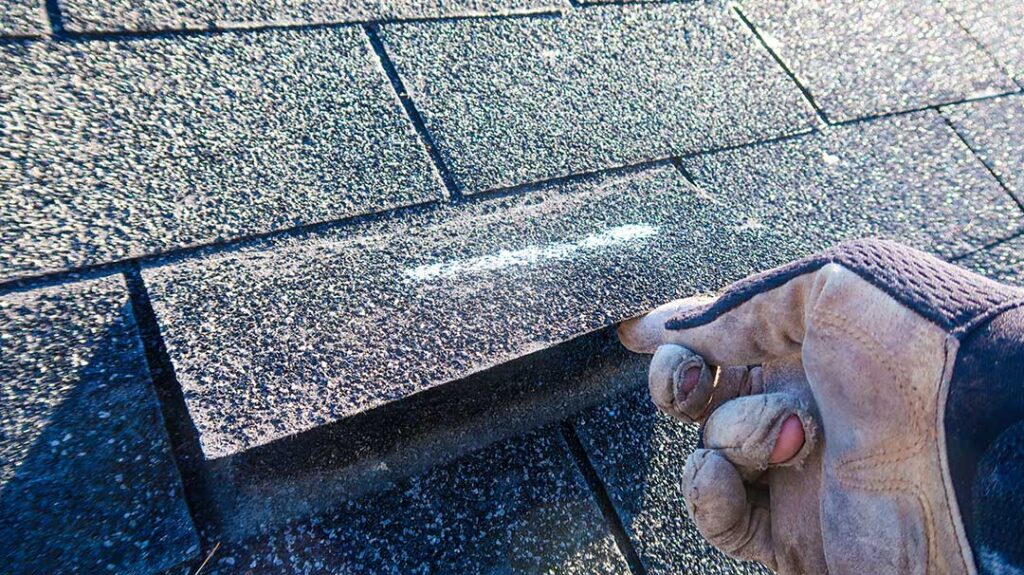
Hail damage is not always obvious from the ground. Small dents, loosened granules, and weakened flashing may appear minor at first but can allow water to enter later. Residents in Wayland, NY can often identify likely hail damage by checking several roof areas together rather than relying on one mark or a single visual clue.
What does hail damage usually look like?
Hail damage commonly appears as circular or irregular dents, bruised shingles, exposed roof matting, and scattered loss of the protective granules that cover asphalt shingles. The damage may be easy to see on soft metal surfaces even when the shingles look mostly intact.
Look for:
- Dark or discolored spots on asphalt shingles
- Areas where the rough surface granules are missing
- Small depressions or dents in shingles
- Cracked, split, or torn shingle tabs
- Exposed black or gray material beneath the granules
- Bent or dented metal flashing
- Dents in roof vents, gutters, downspouts, and chimney caps
- Loose pieces of roofing material in the yard or near downspouts
A hail impact can bruise the underlying shingle mat without creating a large hole. A bruised shingle may feel softer than surrounding areas when gently pressed, although walking on a roof to test it is unsafe and can cause additional damage.
How can hail damage be distinguished from normal roof aging?
Normal aging usually affects broad areas gradually, while hail damage is more often scattered and impact-related. Older shingles may curl, crack, blister, or lose granules evenly across sun-exposed slopes. Hail damage tends to create isolated marks, especially on roof planes facing the direction of the storm.
A few differences can help:
Normal wear: Granule loss is often concentrated near gutters, valleys, roof edges, or places where shingles rub together.
Possible hail damage: Granule loss appears in small circular patches across otherwise sound shingles.
Normal wear: Shingles become brittle, faded, or curled over time.
Possible hail damage: Shingles show fresh-looking dents, sharp fractures, or impact marks after a storm.
Normal wear: Metal surfaces may corrode or discolor.
Possible hail damage: Metal vents, flashing, and gutters have new round dents or sharp impact dimples.
Age still matters. A roof that has already become brittle may develop cracks during severe weather, but those cracks are not necessarily caused by hail alone. The timing, pattern, and location of the marks are useful when evaluating what happened.
Which parts of the roof should be checked?
The shingles are only one part of the roof system. Hail can damage several components, including surfaces that are easier to inspect from the ground.
Check visible areas such as:
- Roof vents and metal flashing
- Gutters and downspouts
- Skylight frames, if present
- Chimney caps and metal chimney flashing
- Drip edges along the roof perimeter
- Siding, window trim, exterior air-conditioning covers, and deck surfaces
- Fences, outdoor furniture, and vehicles for matching dents
Matching marks on nearby metal or painted surfaces can support the possibility that a storm affected the roof. However, dents on siding or gutters do not automatically prove that every roof slope is damaged.
Hail can also affect low-slope sections, porch roofs, shed roofs, and additions differently from the main roof. Each roof plane may need to be considered separately.
Can hail damage be seen from the ground?
Some damage can be seen from the ground, but a ground-level inspection cannot reliably rule out roof damage. Binoculars may help identify missing shingles, obvious dents, or unusual dark spots, but small bruises and granule loss are difficult to confirm from a distance.
Avoid climbing onto a roof after a storm. Wet shingles, loose granules, steep slopes, and hidden structural damage can make the surface dangerous. Ladders also create fall risks, particularly when the ground is wet or uneven.
A safer first step is to inspect the yard, gutters, downspouts, siding, and accessible roof edges. Photograph visible conditions from the ground, including the date and approximate time of the storm if known.
What indoor signs may indicate roof damage?
Water stains on ceilings or upper walls may indicate that hail damaged shingles, flashing, vents, or another roof component. Leaks do not always appear directly below the damaged area because water can travel along roof decking, insulation, rafters, and wall cavities.
Watch for:
- New brown or yellow ceiling stains
- Damp attic insulation
- Dripping around roof penetrations
- Musty odors in the attic
- Peeling paint near upper walls or ceilings
- Daylight visible through the roof deck
- Wet framing or darkened wood

A roof can sustain hail damage without leaking immediately. Shingles may remain temporarily watertight until wind, rain, snow, and freeze-thaw cycles enlarge a weak spot. In a climate with cold winters and changing seasonal temperatures, a small defect may become more noticeable months after the original storm.
If water is actively entering the home, place containers under drips, move belongings away from the affected area, and avoid electrical fixtures that have become wet. Active leaks and electrical hazards require prompt attention for safety reasons.
Does every hailstorm damage every roof?
No. Damage depends on hail size, wind speed, storm direction, roof age, shingle condition, roof slope, installation quality, and the materials used. A storm may damage one roof plane while leaving another largely unaffected.
Hailstones driven by strong wind can strike vertical surfaces and roof slopes more forcefully. Roofs with older or more brittle shingles may be more vulnerable, while newer materials may resist some impacts better. Even so, no roof should be judged solely by age or appearance.
The absence of fallen shingles does not mean the roof is undamaged. Impact bruising and granule loss can occur without dramatic debris in the yard.
What should be done after suspected hail damage?
Begin with documentation and basic protection. Take clear photographs of visible damage from safe locations, including close views and wider images showing where each mark is located. Note the storm date, approximate hail size, wind conditions, and any indoor signs of moisture.
Do not remove damaged shingles or apply permanent patches before the condition has been documented. Temporary measures may be appropriate when rain is entering, but coverings must be secured safely and should not create additional hazards.
A roof evaluation becomes especially important when there are:
- Missing or broken shingles
- Visible holes or exposed underlayment
- Dented vents or flashing
- Water entering the attic or living space
- Large amounts of granules in gutters
- Sagging roof decking or ceiling materials
- Damage near chimneys, skylights, or other penetrations
Insurance policies, building requirements, and repair responsibilities can vary, so records and photographs are useful. Policyholders should review their own coverage language and reporting deadlines rather than assuming that every storm-related condition is handled the same way.
Can hail damage be repaired if the roof is not leaking?
Often, yes. A roof does not need to be leaking before damage deserves attention. Bruised shingles may remain functional for a period of time but have reduced resistance to later weather. Damaged flashing or vents can also become leak points during wind-driven rain or winter conditions.
The appropriate response depends on the extent and location of the damage. Isolated damage may be addressed differently from widespread impact across several roof slopes. A qualified roof inspection is warranted when the roof cannot be safely viewed from the ground, when damage is widespread, or when water intrusion is present.
The most reliable assessment considers the entire roof system, nearby exterior surfaces, attic conditions, and the timing of the storm—not just one dent or missing shingle.
